
The right ski helmet fits snugly first, protects second, and keeps you comfortable third. Get those three in order and the choice gets much easier. A helmet that shifts when you shake your head won’t do its job in a fall, no matter how well it tested, and the best certified shell is wasted if it’s too loose or too tight to wear all day.
In the interest of transparency, we earn a commission on some purchases made through links on this site. As an Amazon Associate I earn from qualifying purchases.
That’s the same mindset hockey players already bring to their gear. You wouldn’t skate with a loose cage, and you shouldn’t ride with a floppy lid. Choosing equipment well is part of playing smart, much like improving hockey IQ is part of playing better. This guide shows you how to measure and fit a helmet, compares resort, backcountry, crossover, and kids’ styles, and looks at two well-regarded options, the Giro Ratio Snow Helmet and the Smith Vantage Helmet Mens Sz L by Smith.
Let’s start with the fitting routine, because ten minutes there can save you a lot of regret on the hill.
Key Buying Factors: What Makes a Ski Helmet Work for You
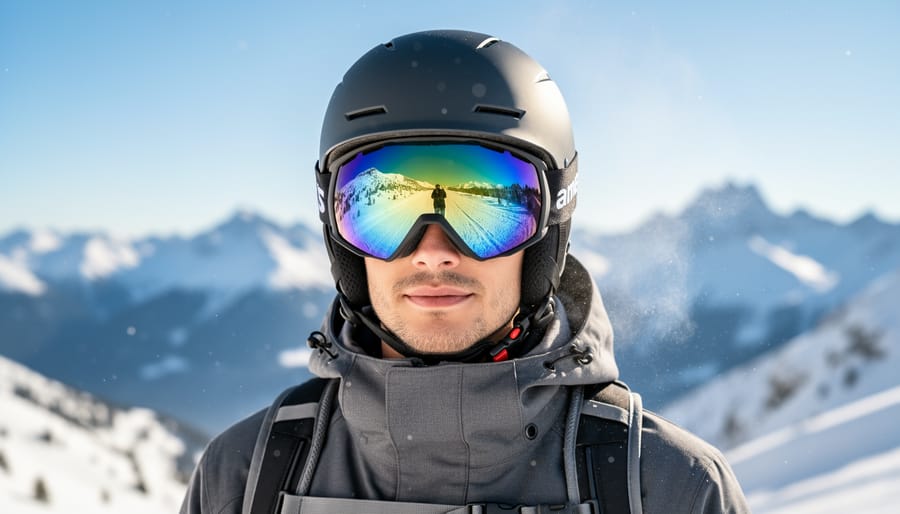
Fit and Impact Protection Come First
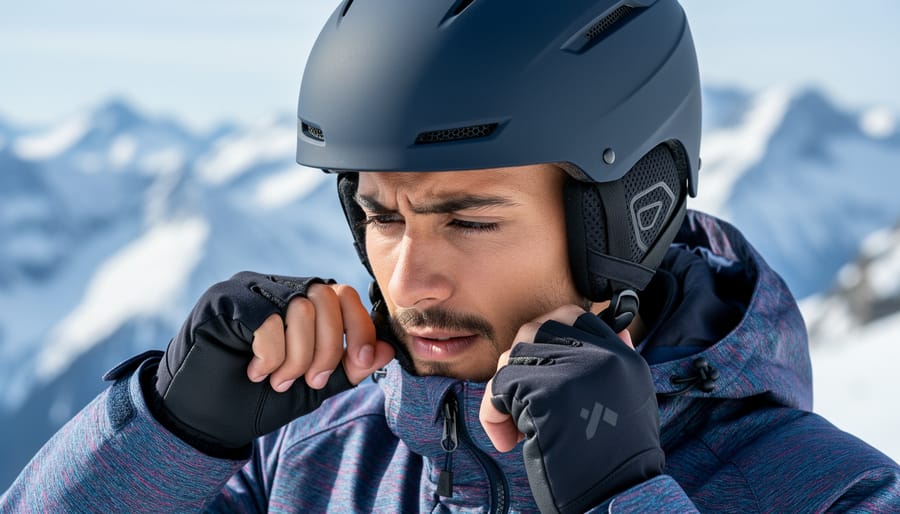
A ski helmet only protects well when it sits correctly, so start with fit before anything else. A good helmet feels snug all the way around, sits level on your head with the front edge just above your eyebrows, and doesn’t wobble when you shake your head. If it slides forward or back, or leaves pressure points, try a different size or shape rather than tightening the dial and hoping for the best.
Many modern helmets add MIPS, a rotational-impact protection system. In simple terms, it’s a thin low-friction layer inside the shell designed to let the helmet rotate slightly relative to your head during an angled impact. It’s a design feature, and no helmet can promise to prevent injury, so fit and a sound shell still do the heavy lifting.
Next, look for safety certifications. These show a helmet has been tested to a recognized standard for its intended use. Ski helmets are tested to ski standards, while backcountry riders sometimes want more. The Smith Summit MIPS is a good example: it’s triple-certified for alpine skiing, mountaineering, and climbing standards, which is why it shows up as a backcountry favourite.
If you’re already thinking about protection and preparation, the same mindset applies to the gear you pick for off-ice conditioning, so it’s worth browsing some quality training equipment to stay strong for winter sports.
Comfort, Warmth, Ventilation, and Goggle Compatibility
A helmet can fit perfectly and still ruin your day if it runs hot, pinches your ears, or fights with your goggles. Comfort is what keeps it on your head from the first chair to the last run, so judge it the way you’ll actually ride.
Reviewers keep coming back to the same idea: a good helmet balances warmth, ventilation, and comfort rather than excelling at only one. Several of the models in current roundups, such as the Smith Vantage 2 MIPS, earn their “most comfortable” labels by getting that balance right.
When you try one on, run through this quick checklist:
- Adjustable vents that open and close easily, even with gloves on.
- A soft liner that sits flat against your forehead without pressure points.
- Ear pads that keep you warm but still let you hear your riding partners.
- A snug chin strap that doesn’t dig in or rub your jaw.
- No gap between the helmet brim and the top of your goggle frame.
That last point matters more than most people expect. A gap at the forehead lets in cold air and leaves exposed skin, while a clean, gap-free match keeps you warm and your vision clear. Bring your goggles to the fitting, put both on together, and move your head around. If everything stays put and feels easy, you’re close to the right choice.
Resort, Backcountry, or Kids: Ski Helmet Types Compared
Not every ski helmet suits every day on the snow. The category you pick should follow how and where you ride, so start there before you compare individual models.
Resort helmets are the everyday default. They balance impact protection, warmth, and adjustable ventilation, and most come with a liner and ear pads for cold lifts. Backcountry and touring helmets trade some of that padding for lower weight and better airflow, since you’ll be working hard on the climb. Lightweight crossover helmets sit in between and suit riders who want one lid for lift laps and uphill missions. Youth helmets put the same fit-first principles into smaller sizes with adjustable systems that grow with a child.
| Helmet type | Best for | Protection and certification notes | Example models in roundups |
|---|---|---|---|
| Resort | Lift-served skiing and all-day comfort in cold conditions | Often MIPS-equipped; focus on a snug fit and warm liner | Smith Method Pro MIPS, Giro Ratio MIPS, Smith Vantage 2 MIPS |
| Backcountry/touring | Skinning uphill, then skiing down | Smith Summit MIPS is triple-certified for ski, mountaineering, and climbing standards | Smith Summit MIPS |
| Lightweight crossover | Riders who split time between resort and uphill travel | Light build with MIPS rotational protection | POC Fornix MIPS |
| Youth | Kids learning to ski or ride | Child-specific sizing with MIPS on listed options | Smith Glide Jr. MIPS (listed by REI) |
Weight and ventilation are where these categories separate most clearly. A touring helmet should breathe well and feel light on your head for hours of climbing, which is why Smith Summit MIPS earns the backcountry label in current roundups. A resort helmet leans toward warmth and coverage, so look for vents you can open and close as conditions change.
Hockey players will recognize the logic. You wouldn’t wear the same helmet for a pickup game that you’d choose for a rigorous practice, and ski helmets work the same way: match the gear to the demands. Check the certification listed for your riding style, then confirm fit with your goggles. A great category choice only pays off if the helmet sits snugly and level on your head.
Two Ski Helmet Recommendations Worth a Close Look
Giro Giro Ratio Snow Helmet: A Comfortable All-Day Resort Option

The Giro Giro Ratio Snow Helmet is a solid pick if you spend most of your time lapping resort runs and want something you can forget about by lunchtime. Customers rate it 4.6 out of 5 from 17 customer ratings, and OutdoorGearLab named the Giro Ratio Mips its Best Value pick. That review also describes it as comfortable enough to wear a full day on the resort slopes, which is exactly what you want from a helmet you’ll wear from first chair to last.
- Best for: all-day resort skiing and riding
- Rating: 4.6 out of 5 from 17 customer ratings
- Availability: limited stock, with only 3 left in stock
- Check at fitting: a snug, level fit with no wobble, and a clean pairing with your goggles
It suits recreational skiers and boarders who want dependable comfort and protection without chasing the most specialized features. If you’re a hockey player cross-training on the slopes, think of it like your off-season conditioning: the goal is steady, comfortable work, not gimmicks. Plenty of players pair that mindset with their usual ice training tools to stay sharp through winter.
Stock is limited, so decide quickly once you’ve confirmed the fit. Before you buy, try it on with the goggles you actually plan to wear. Look for a snug, even grip around your head and no gap at the forehead between the helmet brim and the goggle frame. Shake your head gently: if it shifts or tilts, it isn’t the right size or shape for you.
Smith Vantage Helmet Mens Sz L by Smith: A Top-Rated Large-Size Pick

If you wear a large and want a helmet that shows up well in current reviews, the Smith Vantage Helmet Mens Sz L by Smith deserves a look. Customers give it 4.8 out of 5 from 7 customer ratings, and it’s in stock right now.
- Best for: riders who want a comfortable all-day resort helmet in a men’s large.
- Rating: 4.8 out of 5 from 7 customer ratings.
- Availability: in stock.
- Sizing reminder: this is the men’s size large, so measure first.
The wider Vantage line gets plenty of attention from gear reviewers. Smith Vantage 2 MIPS shows up as Best Overall in Better Trail’s roundup and as Most Comfortable at OutdoorGearLab. It also turns up on the lists at Treeline Review and GearJunkie, and REI includes the Smith Vantage Mips Snow Helmet among its quick recommendations. That kind of repeat appearance is a good sign that the design works for a lot of riders. Keep in mind those picks cover the Vantage line, so check the exact model details before you order.
Sizing is where this one needs a little homework. Because it’s a men’s large, wrap a soft tape measure around your head, just above your eyebrows and ears, and compare the number to the maker’s size chart. A snug, level, no-wobble fit matters more than any feature on the spec sheet. Once it arrives, try it on with your goggles and make sure there’s no gap at your forehead.
What Current Roundups Say About Ski Helmets in 2026
Gear reviewers publish new ski helmet roundups every season, and reading a few of them side by side shows which models and brands keep rising to the top. Treat this as a starting point for your own comparison, since each outlet tests differently.
OutdoorGearLab hands out clear labels: Smith Method Pro Mips for Best Overall, Smith Vantage 2 Mips as Most Comfortable, and Giro Ratio Mips for Best Value. It also names Scott Flow Pro Mips for the top impact test scores and Smith Summit Mips as the pick for backcountry. Better Trail also calls Smith Vantage 2 MIPS its Best Overall, while GearJunkie includes Vantage 2 MIPS and Smith Method MIPS on its lists. SKI says it tested the Smith Rodeo and named it one of its best helmets in 2026, with Smith Rodeo MIPS as its Best Value choice.
Some picks are built for a specific kind of day. REI’s recommendations include a backcountry model, the Smith Summit Mips, and a kids’ option, the Smith Glide Jr. Mips. Powder notes that the Smith Summit MIPS is triple-certified for ski, mountaineering, and climbing standards, which explains its backcountry reputation. Better Trail calls POC Fornix MIPS a lightweight crossover.
Across the roundups, a few names show up again and again: Smith, Giro, POC, Scott, Sweet Protection, and Pret. Treeline Review, for example, lists Pret Cynic X2 and Sweet Protection Ascender MIPS alongside Giro Ledge MIPS and Smith Vantage 2 MIPS.
Use these lists to build a shortlist, then let fit and your riding style make the final call.
Ski Helmet Mistakes to Avoid
Even experienced skiers and riders slip up when buying and wearing a helmet. The good news is that every one of these mistakes is easy to fix once you know what to look for.
- Buying on looks alone: pick the style you love only after confirming it fits your head shape and carries the right certifications for how you ride.
- Skipping the try-on: size charts vary by brand, so measure your head and try the helmet on, ideally with your goggles, before committing.
- Ignoring goggle compatibility: check that there’s no gap at your forehead and that the goggle strap sits cleanly over the helmet.
- Wearing it loose or tilted: the helmet should sit level, covering your forehead, with no wobble when you shake your head. Adjust the dial or fit system until it’s snug.
- Using a hockey helmet for skiing: hockey helmets are built for different impacts and conditions, so choose a helmet made and certified for snow sports.
- Keeping a helmet after a hard impact: a helmet may be compromised even if it looks fine, so check the manufacturer’s guidance and replace it if they advise it.
Think of your helmet like any other piece of performance gear. Just as you’d never skate in skates that don’t fit, don’t ski in a helmet you haven’t tested. Give yourself ten minutes in the store or at home to run through a fitting routine: shake your head, tilt it forward, and check the goggle fit. That small effort pays off every time you clip in, and it keeps you comfortable and confident from the first run to the last.
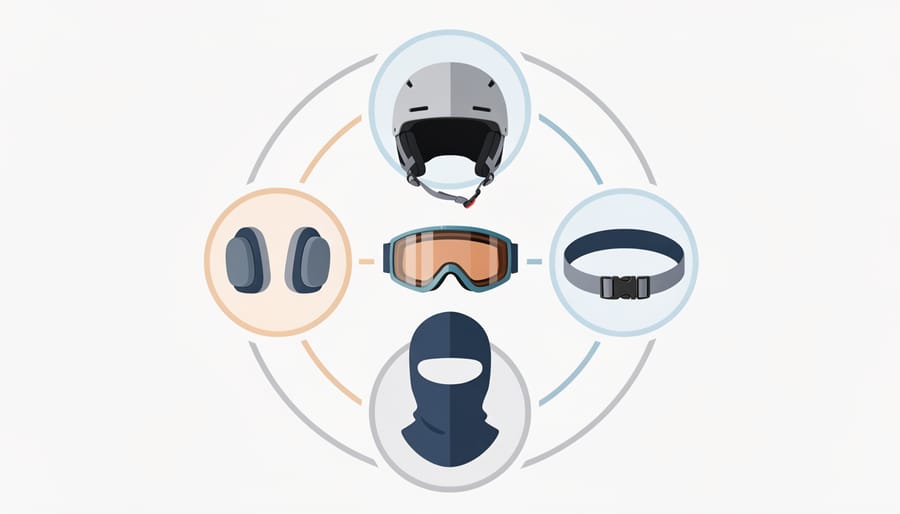
Ski Helmet FAQs
Do I need a ski helmet?
Yes, wearing one is a smart habit for every rider on the snow, from beginners to experts. It adds a layer of protection against impacts, and modern helmets are comfortable enough to forget you have on.
What does MIPS mean?
MIPS is a rotational-impact protection system built into many helmets, including the Smith Summit MIPS and Giro Ratio Mips. Its job is to help manage angled impacts, which is why it shows up on so many top-rated models.
How should a ski helmet fit?
It should sit level, feel snug all the way around, and not wobble when you shake your head. Check that your goggles sit flush against it with no gap at the forehead.
Can I wear a hockey helmet for skiing?
It’s best to use a helmet made for skiing, since hockey helmets are designed for different impacts and conditions. A ski-specific model also gives you proper goggle compatibility and ventilation.
Backcountry riders sometimes ask whether they need something different. The Smith Summit MIPS is triple-certified for ski, mountaineering, and climbing standards, which makes it a strong pick for touring. As for replacement, follow the manufacturer’s guidance, and retire any helmet that has taken a hard hit. If you’re still comparing gear in other sports, our buying guide shows the same fit-first thinking.
Choosing a ski helmet comes down to one idea: fit first. A helmet that sits snug, level, and wobble-free, with the right certifications for how you ride and a clean gap-free pairing with your goggles, will serve you far better than one picked on looks alone. Take your time with the try-on, measure your head, and trust how it feels after a few minutes on.
If you’re still deciding, the two picks we covered are a good place to start. The Giro Ratio Snow Helmet earns a 4.6 out of 5 from 17 customer ratings and suits all-day resort comfort, though stock is limited. The Smith Vantage Helmet Mens Sz L earns a 4.8 out of 5 from 7 customer ratings and is in stock for riders who need a large.
Stay safe out there, and keep building the strength, balance, and endurance that make every winter day on the snow more fun.