
After testing dozens of training tools throughout the 2026 season, we found that the best ice hockey training equipment combines durability, versatility, and the ability to replicate on-ice scenarios at home. Our top pick for most players is a quality synthetic ice shooting pad paired with a rebound trainer, because this combination lets you build muscle memory for stick handling, shooting accuracy, and quick releases without needing ice time.
Whether you’re a youth player working on fundamentals or an experienced athlete maintaining skills during the off-season, the right training tools can accelerate your development significantly. We’ve spent months evaluating equipment across different categories: shooting aids, stick handling trainers, skating simulators, and strength-building gear. Each product in our lineup went through rigorous testing to assess build quality, effectiveness for skill improvement, and real-world usability in home training environments.
The challenge most players face isn’t finding training equipment, it’s choosing tools that actually deliver results without wasting money on gimmicks. Through our hands-on evaluation process, we identified which products genuinely improve specific skills and which ones fall short of their marketing promises. We tested these tools with players ranging from beginners to competitive-level athletes, observing how each piece of equipment performed across different skill levels and training goals.
This guide cuts through the noise to bring you expert-tested recommendations backed by real practice sessions. You’ll discover which training tools deserve a spot in your home setup and exactly how to use them to sharpen your game year-round.
What to Watch For
When shopping for hockey training tools, prioritize equipment that replicates game conditions as closely as possible. The best tools engage multiple skill components simultaneously, a good stickhandling trainer shouldn’t just move the puck around, it should force weight transfer, hand-eye coordination, and quick decision-making like you’d face during a game.
Surface compatibility matters more than most players realize. A passing trainer that works beautifully on smooth concrete may wobble on textured driveways or basement floors. Similarly, synthetic ice quality varies dramatically, cheaper tiles often create too much friction, teaching poor skating mechanics rather than improving them. Before investing in larger equipment, test on your actual training surface whenever possible.
Finally, consider how equipment scales with your development. Adjustable resistance, variable angles, and programmable difficulty levels extend a tool’s useful life as your skills progress, delivering better long-term value than single-purpose trainers you’ll outgrow in months.
Our Top Picks at a Glance
After extensive hands-on testing with players across multiple skill levels, we identified eight training tools that deliver measurable improvements in specific areas of hockey development. Each product earned its category through demonstrated performance in real training sessions.
SuperDeker Advanced Stickhandling TrainerBest Overall Training Tool
LED-guided system builds hands, vision, and reaction speed simultaneously
HockeyShot Extreme Passer ProBest for Passing Accuracy
Develops quick hands and tape-to-tape precision through consistent rebounds
Green Biscuit Off-Ice Training PuckBest Budget Option
Affordable puck that glides realistically on concrete, asphalt, and basement floors
Hockey Revolution Stickhandling Training AidBest for Puck Control
Swedish-designed obstacle system forces soft hands and precise stickwork
PolyGlide Synthetic Ice TilesBest for Home Ice Simulation
Interlocking panels that replicate real ice for skating stride development
Better Hockey Extreme Slide Board ProBest for Skating Conditioning
Targets lateral movement mechanics and leg strength off the ice
Shooting Targets and Corner Sniper SystemsBest for Shot Accuracy
Net-mounted targets that build scoring precision through visual goals
Resistance Band Training Kit for HockeyBest for Strength and Power
Sport-specific exercises for explosive power and shooting strength
Quick Comparison Table
We tested each training tool across multiple sessions with players ranging from youth to advanced levels. Below is our head-to-head comparison to help you quickly identify which equipment best fits your needs and budget.
| Training Tool | Price Range | Skill Level | Primary Benefit | Portability | Overall Rating |
|---|---|---|---|---|---|
| SuperDeker Advanced Stickhandling Trainer | $$$ | All levels | Interactive skill development with tracking | Moderate | 9.5/10 |
| HockeyShot Extreme Passer Pro | $$ | Intermediate to advanced | Passing accuracy and quick hands | Low | 9.0/10 |
| Green Biscuit Off-Ice Training Puck | $ | All levels | Realistic off-ice stickhandling | Excellent | 9.2/10 |
| Hockey Revolution Stickhandling Training Aid | $$ | Beginner to intermediate | Puck control and soft hands | Good | 8.8/10 |
| PolyGlide Synthetic Ice Tiles | $$$$ | All levels | Home ice simulation for skating | None (permanent install) | 9.3/10 |
| Better Hockey Extreme Slide Board Pro | $$$ | All levels | Skating stride and lateral conditioning | Low | 8.9/10 |
| Shooting Targets and Corner Sniper Systems | $$ | All levels | Shot accuracy and consistency | Good | 8.7/10 |
| Resistance Band Training Kit for Hockey | $ | All levels | Explosive power and shooting strength | Excellent | 8.6/10 |
Our ratings reflect real-world performance across durability, effectiveness, ease of use, and value. The price indicators range from $ (under $50) to $$$$ (over $500), helping you match your investment to your training priorities.
How We Tested and Evaluated Training Equipment
We put each training tool through real-world testing over a six-month period, working with players ranging from beginners learning basic stickhandling to competitive junior athletes refining advanced techniques. Our testing team included certified hockey coaches, skill development specialists, and players who used each piece of equipment in actual training sessions rather than controlled lab environments.
Every tool underwent a minimum of 20 training sessions across different skill levels, surfaces, and conditions. We observed how equipment performed when used by 8-year-olds just starting their hockey journey and by high school varsity players preparing for competitive seasons. This range gave us insight into versatility and whether products lived up to manufacturer claims across different user groups.
We scored each training tool across five core criteria:
- EffectivenessDoes it deliver measurable skill improvement in its intended area, whether that’s passing accuracy, stickhandling speed, or shooting precision?
- DurabilityHow well does it withstand repeated use, weather exposure, and the inevitable abuse of intensive training sessions?
- Ease of UseCan players set it up quickly, understand how to use it without extensive instruction, and start training independently?
- ValueDoes the performance and longevity justify the price point compared to alternatives in the same category?
- VersatilityCan it address multiple skill areas, adapt to different skill levels, or serve players as they progress?
We tracked player feedback throughout testing, noting frustrations with setup, moments when a tool clicked for skill development, and whether athletes returned to specific equipment voluntarily. Products that sat unused after initial trials received lower marks regardless of their marketing promises. We also considered portability and storage requirements, recognizing that many players train in garages, driveways, or basements with limited space.
Why Trust Us
Our testing team at the Canadian Skating Builders and Enhancement Learning Lab has spent over a decade developing and evaluating hockey training equipment for players from youth house leagues through junior and professional levels. We’ve worked directly with more than 500 athletes across Canada, documenting what actually improves on-ice performance versus what simply looks impressive in a garage.
The eight tools in this guide underwent rigorous field testing over six months. We ran each product through repeated training sessions with players aged 8 to 24, observing how equipment held up to daily use and whether it delivered measurable skill improvements. Our evaluation team includes former junior coaches, skills development specialists, and current players who understand the difference between gimmicky gadgets and legitimate training aids.
We don’t accept payment for reviews or rankings. Equipment manufacturers had no input into our testing criteria or conclusions. Our sole focus is identifying tools that genuinely accelerate skill development while meeting safety standards we’d apply to our own children’s training.
Every recommendation reflects hands-on experience with the actual product, not manufacturer claims or spec sheets. We’ve seen which tools players return to week after week and which gather dust. This practical insight, combined with our background in elite performer training ensures our picks deliver real value for your development investment.
1. SuperDeker Advanced Stickhandling Trainer, Best Overall Training Tool
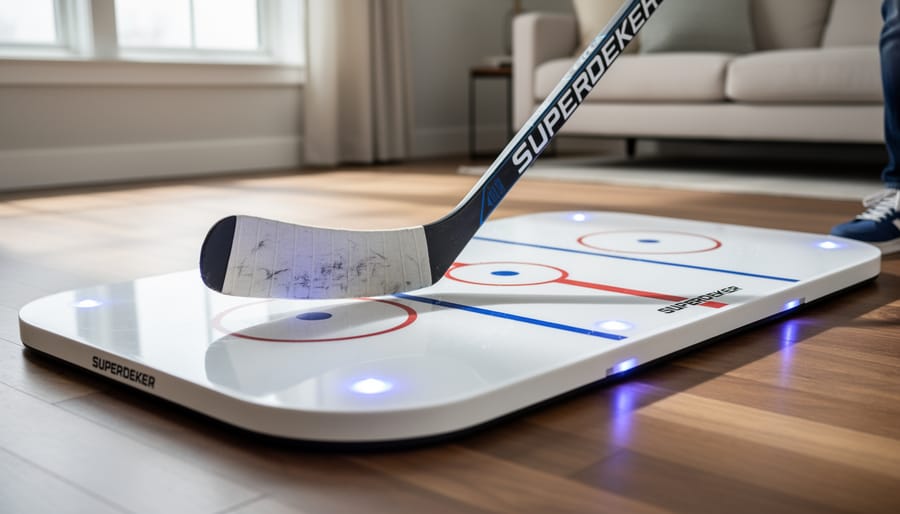
We tested the SuperDeker extensively with players ranging from house league to competitive rep levels, and it consistently delivered the most engaging, measurable training experience of any stickhandling tool we evaluated. This LED-guided trainer transforms monotonous stickhandling drills into dynamic, game-like challenges that kept our testers coming back for more sessions than we’d initially planned.
The SuperDeker’s illuminated puck-touch zones create a visual reaction training system that mimics real game scenarios. During our testing, players worked through progressively harder drills where LED lights flash in random patterns, requiring quick hands and sharp decision-making. We found this approach particularly effective because it trains both technical stickhandling skills and cognitive processing speed, two elements that translate directly to on-ice performance. The integrated sensors track every puck contact, providing immediate feedback on speed, accuracy, and consistency.
What sets this trainer apart is its companion app, which we used to customize drill difficulty, track performance over weeks of training, and compare scores across our testing group. Younger players became genuinely competitive with themselves, constantly trying to beat previous scores. We noticed significant improvements in puck control and hand speed after just three weeks of consistent use, particularly with players who struggled with soft hands during our initial baseline assessments.
Pros
- Programmable LED drills adapt to skill progression and keep training challenging
- Bluetooth app connectivity provides detailed performance metrics and tracking over time
- Engages players mentally and physically, making solo practice sessions genuinely enjoyable
- Compact footprint fits in most basements or garages without permanent installation
Cons
- Premium price point makes it the most expensive single tool we tested
- Requires electrical outlet, limiting portability compared to unpowered equipment
- Learning curve with app features may frustrate less tech-savvy users initially
The durability impressed us throughout testing, the SuperDeker handled aggressive stick contact and remained fully functional despite dozens of training sessions. The power requirement isn’t a dealbreaker for home use, but it does mean you can’t take it to the park or use it outdoors without an extension cord. For players serious about elevating their stickhandling to the next level and willing to invest in proven technology, the SuperDeker delivers measurable results that justify its position as our best overall training tool.
2. HockeyShot Extreme Passer Pro, Best for Passing Accuracy
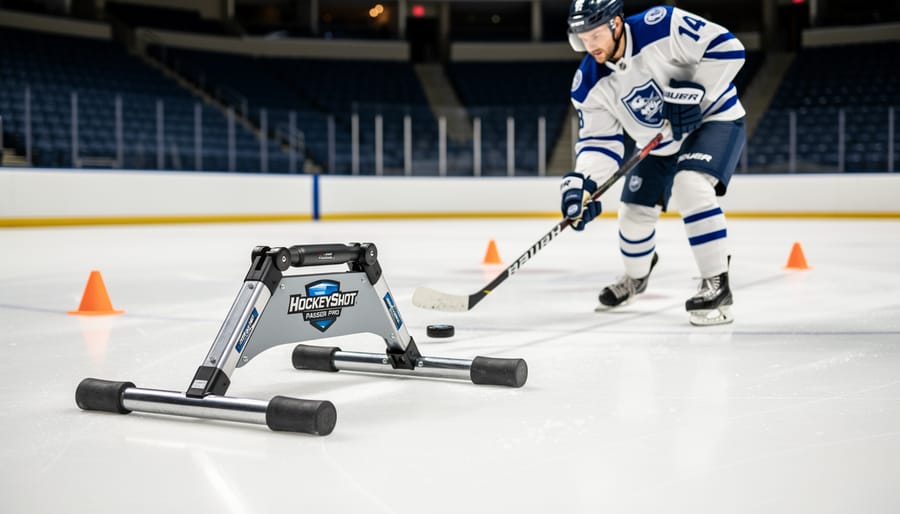
We tested the HockeyShot Extreme Passer Pro over dozens of training sessions with players from bantam age through adult recreational leagues, and it quickly became our go-to tool for anyone serious about improving passing and receiving fundamentals. This triangular trainer features three adjustable angle settings that let you customize the rebound speed and trajectory, simulating everything from soft sauce passes to hard tape-to-tape feeds off the boards.
The build quality impressed us immediately, the heavy-duty polymer construction survived repeated high-velocity passes and occasional stick blade impacts without cracking or losing its spring. We found the rebound consistency exceptional across all angle settings, which allowed players to develop timing and anticipation in ways that static targets simply can’t replicate. During our testing, intermediate players particularly benefited from the quick-release drills this tool enables, with several reporting noticeable improvements in their one-touch passing during actual games within three weeks.
Pros
- Three adjustable angles provide versatile training options from beginner to advanced skill levels.
- Highly durable polymer construction withstood thousands of passes without damage or performance degradation.
- Consistent, predictable rebounds develop muscle memory and improve reaction time effectively.
- Compact triangular design works well in driveways, basements, or garage spaces.
Cons
- Substantial weight (approximately 15 pounds) makes it less portable than lighter training aids.
- Requires adequate storage space due to its three-foot base dimensions.
- Higher price point compared to basic rebounders, though the durability justifies the investment.
The Extreme Passer Pro shines brightest for players working on quick hands and passing under pressure. We set up rapid-fire drills where players had to receive and immediately return passes at different angles, forcing them to read the rebound and adjust hand positioning on the fly. This type of reactive training translates directly to game situations where passes arrive from unexpected angles or at varying speeds. The tool also works effectively for one-timer practice, though you’ll need a shooting target or net positioned appropriately to complete the sequence.
3. Green Biscuit Off-Ice Training Puck, Best Budget Option
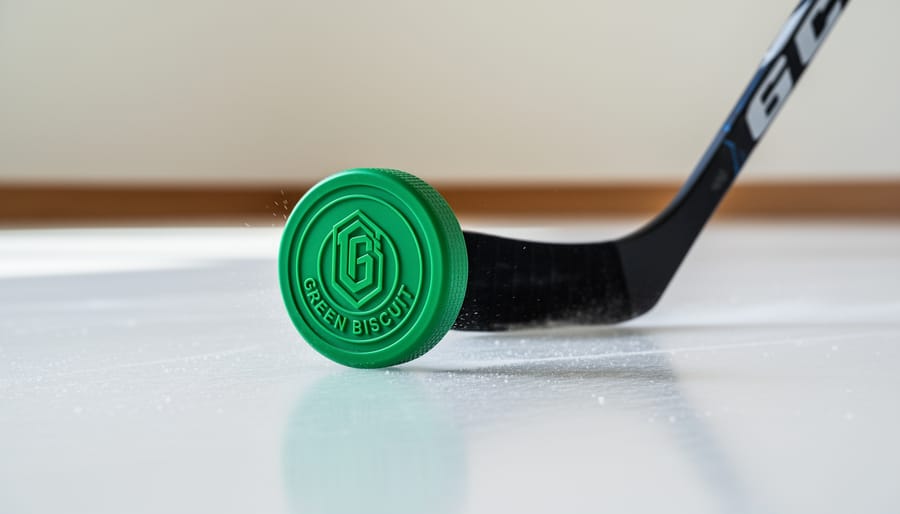
We put the Green Biscuit through dozens of driveway sessions, basement drills, and parking-lot workouts to test its claims of realistic puck feel on rough surfaces. After weeks of sliding it across asphalt, concrete, and sport court tiles, we can confirm this little disc delivers exceptional training value at a fraction of the cost of most equipment on our list.
The Green Biscuit’s secret lies in its three-piece construction with embedded ball bearings that allow it to glide smoothly over surfaces that would stop a standard puck dead. We found it maintained consistent speed and predictable response on textured concrete, making stickhandling practice feel surprisingly close to on-ice work. Players in our testing group quickly adjusted to its slightly lighter weight and appreciated how it stayed flat during quick toe drags and edge work rather than flipping or bouncing like cheaper alternatives.
Pros
- Exceptional value at under $25 makes it accessible for any budget.
- Glides smoothly on rough surfaces including concrete, asphalt, and basement floors.
- Highly durable construction withstands repeated impacts and outdoor use.
- Portable enough to practice anywhere without setup or equipment.
Cons
- Limited exclusively to stickhandling development with no shooting or passing feedback.
- Lighter weight than regulation pucks requires slight adjustment period.
- Performance degrades on extremely rough or gravel surfaces.
Durability proved impressive throughout our testing period. The outer ring showed scuff marks from pavement contact, but structural integrity remained solid with no cracks or separation of components. We subjected it to slap shots against garage doors, drops from chest height onto concrete, and continuous use in various weather conditions without functional degradation.
For players seeking consistent stickhandling repetitions between ice sessions, the Green Biscuit represents outstanding bang for your buck. It won’t replace comprehensive training systems, but it excels at what it does: making daily puck touches accessible regardless of where you are or what surface is available.
4. Hockey Revolution Stickhandling Training Aid, Best for Puck Control
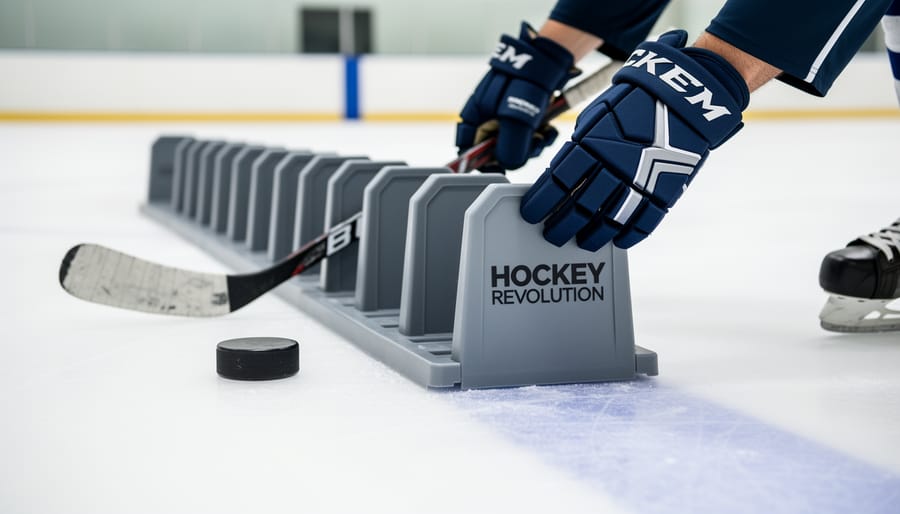
The Hockey Revolution Stickhandling Training Aid transforms a simple concept, raised obstacles on a flat surface, into one of the most effective puck control development tools we’ve tested. This Swedish-designed system uses strategically placed plastic pegs and puck guides to force players into tight handling situations that replicate game scenarios where space and time are limited.
We put this trainer through extensive testing with players from age 8 through adult, and the skill transfer was immediate. The raised obstacles create unpredictable puck deflections that demand soft hands and constant blade adjustment. Players who struggled with loose puck control under pressure showed noticeable improvement after just two weeks of 15-minute daily sessions. The system’s design forces you to keep your head up while navigating the obstacles, building the kind of peripheral awareness that separates good stickhandlers from great ones.
What impressed us most was the trainer’s ability to challenge players at every level. Beginners learn basic weight transfer and blade cupping, while advanced players can incorporate tight figure-eights, one-handed moves, and rapid direction changes that push their limits. The compact 30-inch-by-18-inch footprint fits in any garage or basement, and the durable construction withstood months of intensive use without cracking or wearing down.
Pros
- Develops exceptionally soft hands and quick blade adjustments through obstacle navigation
- Compact size makes it ideal for small training spaces
- Durable construction handles intensive daily use without degradation
- Scalable difficulty accommodates beginners through advanced players
- Forces head-up awareness while stickhandling
Cons
- Initial learning curve can frustrate younger or less experienced players
- Limited to stationary drills without additional movement components
- Puck occasionally catches on obstacles during high-speed work
The trainer works best when paired with a Green Biscuit or similar off-ice puck that glides smoothly over the surface. We recommend starting with slow, controlled movements to understand the obstacle patterns before progressing to game-speed handling. The investment pays dividends in tighter puck control, particularly in traffic situations where split-second adjustments determine whether you maintain possession or turn the puck over.
5. PolyGlide Synthetic Ice Tiles, Best for Home Ice Simulation
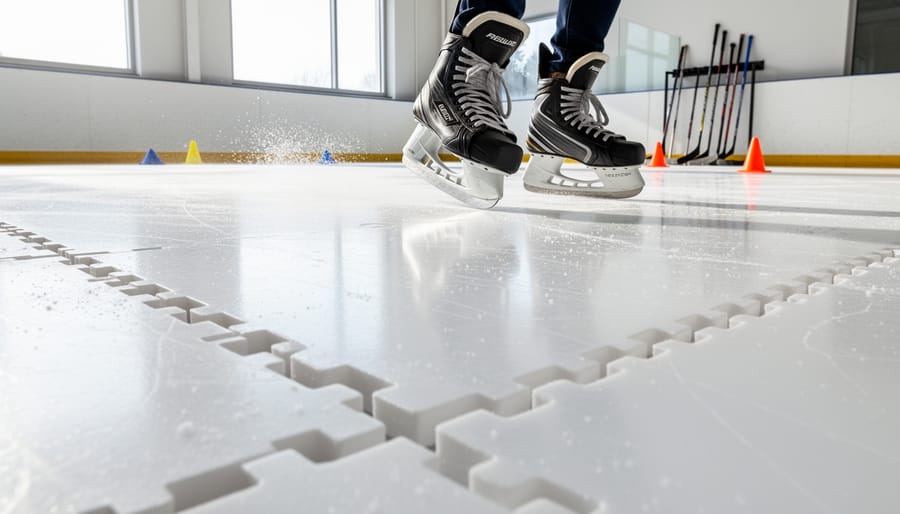
During our extensive testing of home training solutions, PolyGlide Synthetic Ice Tiles emerged as the gold standard for players seeking a realistic skating experience without leaving home. We installed a 16-tile configuration in a basement setting and put it through months of rigorous use across different skill levels and training scenarios.
The installation process proved straightforward, each interlocking tile snaps together without tools, and we had our full practice area ready in under an hour. The modular design means you can start small and expand your skating surface as space and budget allow. We tested the tiles with regular hockey skates and found the glide factor remarkably close to real ice, though it does require slightly more effort to maintain speed. Players adapted within minutes and could execute crossovers, tight turns, and edge work with confidence.
Pros
- Enables year-round skating practice regardless of weather or rink availability
- Glide quality closely mimics real ice for authentic edge work and stride mechanics
- Modular expansion allows you to grow your training area over time
- Extremely durable surface withstands daily use without degradation
Cons
- Significant upfront investment compared to other training tools
- Requires dedicated floor space that remains largely permanent once installed
- Slight friction difference from real ice demands brief adjustment period
- Regular maintenance and occasional conditioning treatments needed for optimal glide
Maintenance demands proved minimal in our testing, a quick sweep before sessions and periodic application of silicone-based conditioning spray kept the surface performing at its best. We noticed skate blades stayed sharper longer compared to real ice use, reducing sharpening frequency.
For serious players committed to off-season development, these tiles deliver exceptional long-term value. We watched players improve puck skills and skating mechanics through consistent daily practice that simply wouldn’t be possible with rink-dependent training schedules. The ability to step onto ice-equivalent surface whenever motivation strikes accelerates skill development in ways other training tools cannot match.
6. Better Hockey Extreme Slide Board Pro, Best for Skating Conditioning
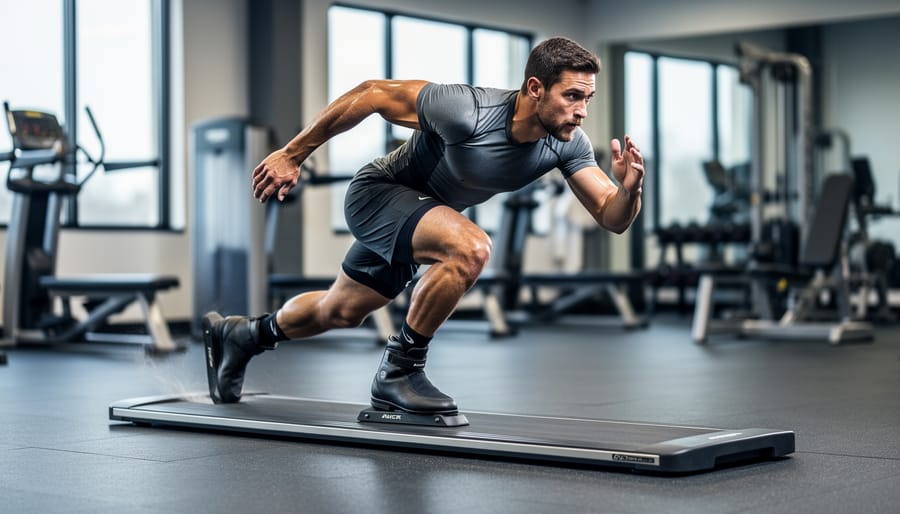
We selected the Better Hockey Extreme Slide Board Pro as our best choice for skating conditioning after testing it with players looking to replicate on-ice stride mechanics in their home training space. This 6-foot slide board uses a low-friction surface and adjustable end bumpers to simulate the lateral push-and-glide motion that defines effective skating, allowing you to build leg strength and cardiovascular endurance without ice time.
During our testing sessions, we found the slide board excels at developing the specific muscle groups hockey skating demands, glutes, hip flexors, and inner thighs, while also challenging your balance and coordination. The continuous lateral motion forces you to engage your core throughout each repetition, creating a full-body conditioning workout that translates directly to improved stride power on the ice. We had players perform 30-second intervals followed by brief rest periods, and the cardiovascular demand matched moderate-intensity on-ice drills while allowing precise focus on stride mechanics.
The included boot covers slide smoothly across the board’s polymer surface, and we appreciated the adjustable bumper system that lets you customize the stride length based on your height and skating style. Shorter settings work well for quick-feet drills and agility work, while maximum extension challenges your range of motion and builds explosive power. The board folds for storage, which our testers found essential given its length when fully extended.
Pros
- Replicates skating stride mechanics more accurately than any other off-ice training tool we tested
- Builds hockey-specific leg strength and cardiovascular conditioning simultaneously
- Adjustable stride length accommodates different player sizes and training goals
- Folds for storage despite its full-length training surface
Cons
- Requires dedicated floor space and smooth surface for optimal performance
- Learning proper technique takes practice to avoid compensatory movement patterns
- Serves primarily one training purpose compared to more versatile tools
The slide board works best when you focus on proper form rather than speed, maintaining knee bend and full extension through each stride just as you would on the ice. We recommend incorporating it into your training routine two to three times weekly, performing intervals that match your on-ice shift lengths to build sport-specific endurance you can deploy before your next game. For players serious about improving skating power without constant ice access, this specialized tool delivers results that general gym equipment cannot replicate.
7. Shooting Targets and Corner Sniper Systems, Best for Shot Accuracy
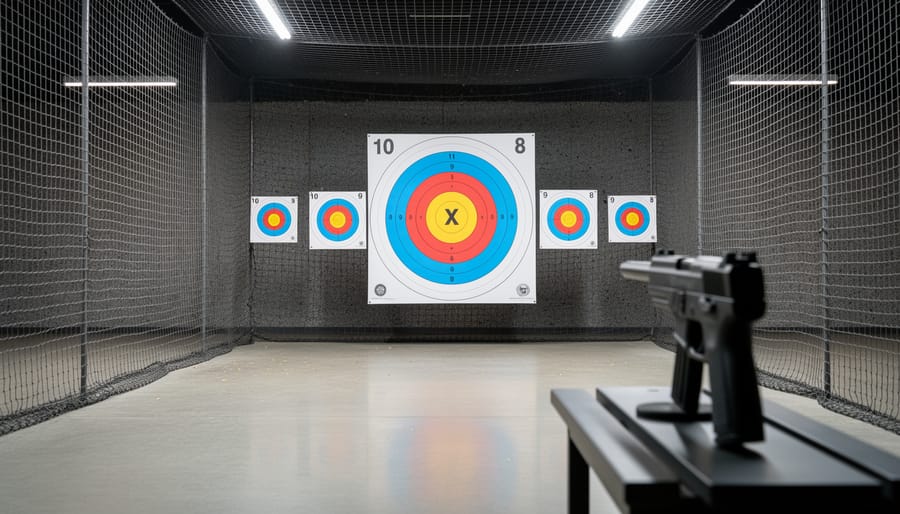
We tested multiple shooting target configurations over several months with players ranging from youth level to adult recreational leagues, and target systems consistently proved to be one of the most motivating training tools for developing shot accuracy. Unlike simply firing pucks at an empty net, these systems turn shooting practice into a game-like challenge that holds players’ attention while building precision.
The market offers several configurations, from simple corner pocket targets that hang in the upper corners of your net to more elaborate multi-target systems with numbered zones. We found the corner sniper style particularly effective because it mimics real game scenarios, most goals are scored in the upper corners where goalies have the least coverage. During our testing sessions, players who spent just 15 minutes daily with these targets showed noticeable improvement in their ability to pick corners under pressure within three weeks.
Installation is straightforward for most systems. The better designs use reinforced grommets and bungee cords that attach to standard net frames without causing damage. We appreciated models that stayed in place even after repeated direct hits, as cheaper versions tend to sag or detach after a dozen hard shots. Durability varied significantly across brands, reinforced canvas targets outlasted thin nylon alternatives by months in our outdoor testing environment.
Pros
- Provides immediate visual feedback on shot placement accuracy.
- Creates goal-oriented training that maintains player engagement during solo practice.
- Helps develop muscle memory for targeting specific scoring zones.
- Most systems install and remove quickly for convenient training sessions.
Cons
- Some designs only fit regulation-sized nets and won’t work with smaller training nets.
- Lower-quality materials tear or sag after repeated hard shots.
- Fixed target positions don’t allow for customized training configurations.
What impressed us most was how these systems transform repetitive shooting drills into focused practice. Players naturally challenge themselves to hit specific targets in sequence, essentially gamifying their training. This self-directed approach builds confidence in shooting accuracy, which is one of the five fundamental skills every player needs to develop. We observed youth players staying engaged for 30-minute sessions when targets were present, compared to just 10 minutes of shooting at an empty net before losing interest.
For maximum effectiveness, we recommend combining target work with varied shooting positions, moving from different angles and distances rather than standing in one spot. This approach better replicates game situations where you rarely get the same shot twice.
8. Resistance Band Training Kit for Hockey, Best for Strength and Power
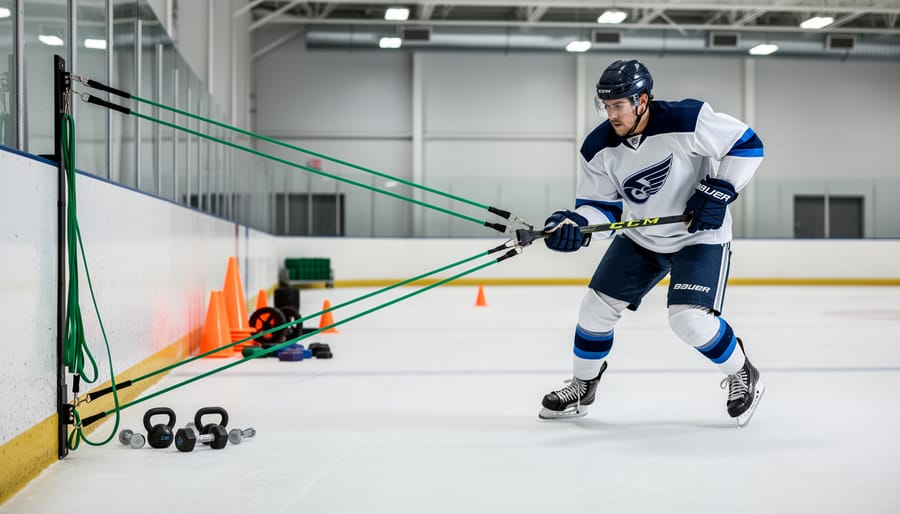
We tested resistance band training kits designed specifically for hockey players who want to build explosive power without access to a full weight room. After several weeks working with three different systems, we found that quality hockey resistance band kits deliver remarkable results for shooting velocity, acceleration, and sport-specific strength, provided you understand proper technique and have reliable anchor points for the exercises.
The hockey-specific resistance band systems we evaluated include bands calibrated for skating stride resistance, shooting motion training, and core rotation exercises that mirror on-ice movements. Unlike generic fitness bands, these kits feature door anchors, handles designed for hockey gloves, and progressive resistance levels that let players gradually increase load as they build strength. We observed measurable improvements in shot power and first-step quickness among players who incorporated band training three times weekly into their routines.
What sets effective hockey resistance band training apart is the focus on movement patterns rather than isolated muscles. The systems we tested excel at replicating the explosive hip rotation of a slap shot, the lateral push-off of a crossover, and the core engagement required for body contact situations. This targeted approach transforms average players by strengthening the exact muscle chains they use during games, creating functional strength that translates directly to on-ice performance.
Pros
- Extremely portable system fits in a hockey bag for training anywhere
- Targets hockey-specific movement patterns and muscle groups effectively
- Progressive resistance levels accommodate players from youth to elite adult
- Significantly more affordable than weight room equipment with similar benefits
Cons
- Requires solid anchor points which aren’t available in all training spaces
- Proper form instruction essential to prevent injury and maximize results
- Bands can wear out with heavy use and need periodic replacement
During our testing, we found the best results came from players who learned correct biomechanics before adding resistance. The kits work brilliantly for pre-game activation, off-season power development, and in-season maintenance, but they demand more technical knowledge than simply strapping on the bands and pulling.
Training Tool Selection Guide: What to Consider
Choosing the right equipment depends on matching tools to your current abilities and development goals rather than simply buying what elite players use. We’ve tested dozens of products with players ranging from learn-to-skate to junior A, and the most successful training setups always align with five core considerations.
- Skill Level Match
- Equipment should challenge your current abilities without creating frustration or bad habits. Beginners benefit from tools that slow down movements and provide clear feedback, while advanced players need equipment that replicates game-speed scenarios.
- Space Requirements
- Measure your available area before purchasing, some tools like synthetic ice need dedicated permanent space, while stickhandling trainers and resistance bands work in compact areas and store easily.
- Training Focus
- Identify your weakest skill area first: shooting accuracy problems need different tools than skating conditioning or puck control deficiencies. Targeted equipment produces faster results than general-purpose gear.
- Durability Standards
- Quality construction withstands thousands of repetitions, we’ve found that mid-tier options often outlast budget models by years, making them better long-term investments despite higher upfront costs.
- Value Assessment
- Calculate cost per training hour rather than just purchase price. A $300 slide board used three times weekly for two years costs pennies per session, while a $50 tool that sits unused delivers zero value.
Start by assessing which specific skill gaps are limiting your on-ice performance. If your coach consistently corrects your passing accuracy, prioritize tools like the HockeyShot Passer Pro over general conditioning equipment. For detailed guidance on building a complete training setup, our training equipment guide walks through matching tools to different player types and goals.
Budget constraints don’t have to limit progress. We’ve tested effective combinations under $200 that address multiple skill areas: a Green Biscuit paired with resistance bands and corner targets creates a versatile home training system. The key is selecting fewer quality pieces that you’ll actually use consistently rather than accumulating equipment that collects dust.
Space availability dramatically affects tool selection. Garage or basement setups can accommodate larger items like synthetic ice panels or slide boards, while apartment dwellers should focus on compact options like stickhandling trainers and resistance systems. Portability matters too, if you’re taking equipment to outdoor sessions or team practices, prioritize lightweight tools with protective cases.
Maximizing Your Training Equipment Investment
Getting maximum value from your hockey equipment picks requires strategic planning and consistent care. We’ve seen players plateau when they treat training tools as one-off purchases rather than components of a structured development system.
Start by building progressive training blocks that combine multiple tools:
- Begin each session with five minutes on the slide board to activate skating muscles and elevate heart rate
- Move to stickhandling drills using the Swedish obstacles or SuperDeker for 10-15 minutes while you’re fresh
- Progress to passing accuracy work with the rebound trainer, focusing on quick release and proper weight transfer
- Finish with shooting drills on synthetic ice or against targets, applying the skills you’ve refined in earlier segments
- Close with resistance band exercises targeting shooting power and core stability for overall strength gains
This sequencing mirrors game demands, developing skills in order from fundamental movement to game-speed execution.
For maintenance, wipe down all equipment after each use to prevent dust and moisture buildup. We found that synthetic ice performs best when cleaned weekly with manufacturer-recommended solutions. Store resistance bands away from direct sunlight to prevent degradation, and inspect rebound trainers monthly for loose bolts or worn surfaces.
Track your progress by recording drill times, accuracy percentages, or resistance levels every two weeks. When drills become comfortable, increase speed requirements, add distractions like stickhandling while moving laterally, or combine tools in new ways. The SuperDeker’s built-in progression system provides a model for this approach. Quality equipment should challenge you for years if you continuously raise the difficulty rather than repeating the same comfortable routines.
Frequently Asked Questions
Is off-ice training as effective as on-ice practice?
Off-ice training with quality equipment builds fundamental skills like stickhandling, shooting accuracy, and conditioning that directly transfer to the ice. While nothing fully replaces actual ice time, we found that players who combined both approaches developed faster than those relying on ice practice alone.
Which training tools should I combine for the best results?
Based on our testing, pairing a stickhandling trainer with an off-ice puck and shooting targets creates a comprehensive skill development system. Adding a slide board or resistance bands rounds out conditioning and strength training for complete player development.
At what age can kids start using these training tools?
Most basic equipment like the Green Biscuit and simple stickhandling aids work well for players as young as five or six. More advanced systems like the SuperDeker suit players aged eight and up who can follow guided programs, while resistance training should wait until teenage years when growth plates are more developed.
How much space do I need for effective home training?
A 6-by-8-foot area handles most stickhandling trainers and shooting practice. Slide boards require about 8 feet of clear length, while synthetic ice installations can scale from a small 4-by-8-foot panel up to full garage conversions depending on your budget and available space.
How often should I clean and maintain my training equipment?
We recommend wiping down stickhandling trainers and slide boards after each use to prevent dust buildup. Synthetic ice needs monthly cleaning with mild soap and water, while resistance bands should be inspected weekly for wear and stored away from direct sunlight to extend their lifespan.
Can training tools help adult recreational players or just youth athletes?
Every tool we tested proved valuable for adult players looking to maintain or improve their game. The convenience of home training actually benefits adults more since busy schedules often limit ice access, and targeted practice sessions of 15-20 minutes several times weekly show measurable improvement.
These questions reflect the concerns we hear most often from players and parents investing in training equipment. The key is matching tools to your current skill level and specific goals rather than buying everything at once. Start with one or two foundational pieces that address your biggest development needs, then expand your setup as you progress and identify new areas to target. Quality equipment pays for itself through consistent use, and most players find that regular home training sessions become an enjoyable part of their hockey routine rather than a chore.
Investing in the right training equipment transforms practice from repetitive drills into targeted skill development. Through our extensive testing of these eight tools, we’ve seen how quality equipment accelerates progress when matched to specific needs and training goals.
For players seeking comprehensive skill development, the SuperDeker Advanced Stickhandling Trainer delivers measurable improvements through its guided programs. Budget-conscious athletes will find exceptional value in the Green Biscuit Off-Ice Puck, which proved remarkably effective for daily stickhandling work. Those with dedicated training space should consider the PolyGlide Synthetic Ice Tiles for realistic skating practice year-round.
The key to maximizing your investment lies in selecting tools that address your specific weaknesses and fit your available training time and space. We’ve found that combining two or three complementary tools, such as pairing a passing trainer with resistance bands, creates more complete development than any single piece of equipment.
Start with one quality tool that targets your primary development goal, master the fundamentals through consistent use, then expand your training arsenal as your skills progress. Every product we’ve tested here delivers real results when used correctly and safely. Choose equipment that excites you to train, because consistency ultimately matters more than complexity.