
Good off-season training for youth football comes down to three things: building skills, building general fitness, and keeping the game fun. Plan on two to four short sessions a week, about 30 to 45 minutes each, with at least one full week of rest right after the season ends. No special equipment is needed to start. A ball, a few cones, an open patch of grass, and a parent or coach to supervise will do the job.
Why does this work? Young bodies are still growing, and a season of tackling, sprinting, and cutting leaves them tired in ways that don’t always show. Time away from heavy contact lets muscles and joints recover. It also opens a window to work on the things that win games later: footwork, balance, catching, throwing, and running mechanics. Kids who finish the off-season excited to play tend to show up stronger in August.
Below, you’ll find the tools you need, the safety rules and stop signs every parent and coach should know, a step-by-step plan you can start this week, and ways to check that it’s working.
What Off-Season Training Should (and Shouldn’t) Look Like for Young Players
Off-Season vs. In-Season Training: How the Two Plans Connect
Think of the off-season as the time you build the engine, and the in-season as the time you keep it running. During the off-season, young players put in the work on strength, speed and movement skills. Once games begin, that base needs only a smaller, steadier top-up to hold onto those gains.
What changes is volume and intensity. Off-season weeks might include three or four short sessions. In-season, drop to one or two lighter sessions, and keep them focused on quick warm-ups, bodyweight strength and mobility, since games and practices already add plenty of load.
The biggest mistake is stopping altogether after the first kickoff. Kids who skip training for months often feel slower and sorer by midseason. Borrowing ideas from other sports helps here, because lessons in hockey skills like balance and lateral quickness carry over well, and choosing exercise that translates to the field keeps short sessions worthwhile.
Tools, Space and Gear You’ll Need Before You Start
You don’t need a gym membership or a garage full of equipment to get started. A patch of grass, a driveway, or a quiet corner of the school field is plenty. What matters most is a safe, flat surface with room to sprint about 20 yards and change direction without bumping into anything.
Here’s a simple checklist, with budget-friendly swaps for the basics:
- Must-have: Open space with flat, dry footing and enough room to run 20 yards.
- Must-have: Cones, or use shoes, water bottles, or tape lines as markers.
- Must-have: Water bottle and a notebook or free app to log sessions.
- Nice-to-have: An agility ladder, or chalk or masking tape laid out as ladder squares.
- Nice-to-have: Light resistance bands for warm-ups and lower-body work.
- Nice-to-have: A medicine ball or soft weighted ball, or a small sandbag.
- Nice-to-have: A jump rope for footwork and conditioning.
Bodyweight-only sessions work well, especially for younger players still learning proper movement. Squats, lunges, planks and bridges cost nothing, so no one gets left out over gear.
If your child also skates or plays hockey, a lot of this overlaps. Bands, cones, jump ropes and medicine balls all carry over to off-ice sessions, so one small kit does double duty. For ideas on what to add as your player grows, browse our guide to training equipment and these reviewed training tools.
Safety First: Warnings and When to Hit the Brakes
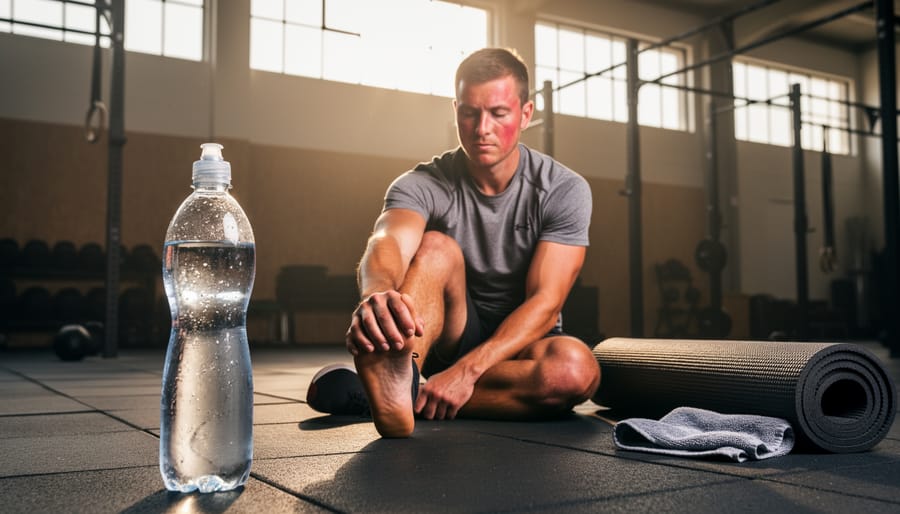
A safe off-season plan starts before the first drill. If your young athlete has any health concerns, such as asthma, a past injury, heart or joint issues, or a recent growth spurt that has them feeling awkward, check in with a doctor first. A routine physical is a sensible starting point either way.
Strength work deserves extra care. Kids should do it under the watch of a qualified coach, and technique always comes before added load. Bodyweight squats, planks and lunges done well beat heavier work done sloppily. Add resistance only when the movement looks smooth and controlled.
Heat and hydration matter more than most families expect. Offer water before, during and after sessions, train in the cooler parts of the day, and build in shade and rest breaks. Sleep is part of the plan too. Growing athletes recover and build skills while they rest, so protect those hours.
Stop a session whenever something feels off, and don’t push through it.
Ordinary muscle soreness that fades in a day or two is normal. Soreness that lingers or keeps getting worse is a cue to scale back and talk with a coach or healthcare provider. Parents and coaches should always lean toward caution, because a short pause now keeps a young player healthy, confident and excited to get back out there.
Step-by-Step: Building Your Youth Football Off-Season Plan
Warm-Up and Mobility Routine to Start Every Session
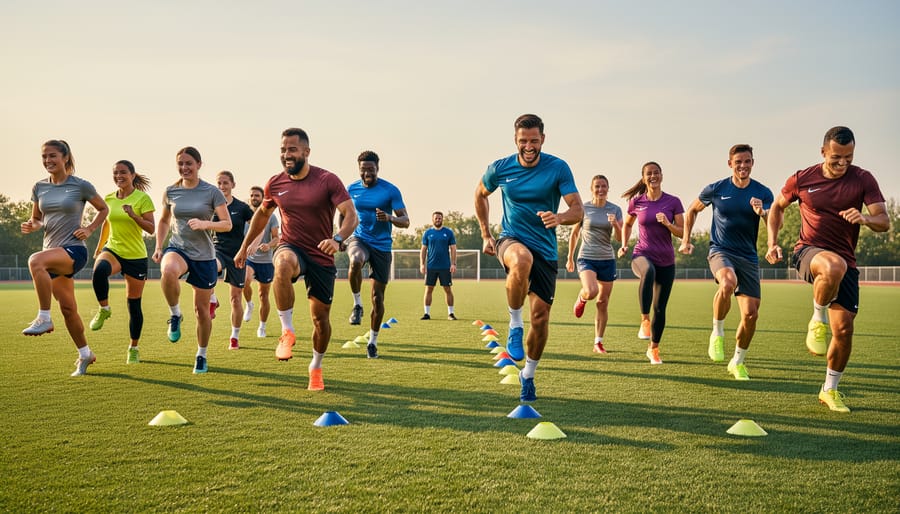
Start every off-season session with five to eight minutes of movement that wakes the body up. Dynamic warm-ups raise heart rate, loosen the joints, and get muscles ready for sprinting and cutting. Research shows warm-up programs reduce injuries in young athletes, so this is time well spent.
Here’s a simple routine kids can repeat every session:
- Light jogging for one to two minutes, easy pace, just to warm up.
- Skipping for 20 seconds, then rest, for two rounds.
- Leg swings, 10 forward and back and 10 side to side per leg, holding a fence or a teammate for balance.
- Walking lunges, eight steps per leg, keeping the front knee over the ankle.
- Arm circles, 10 forward and 10 backward, starting small and getting bigger.
Keep the pace relaxed and the form tidy. If everyone breaks a light sweat and feels loose, the warm-up did its job.
Speed, Agility and Football Skill Work
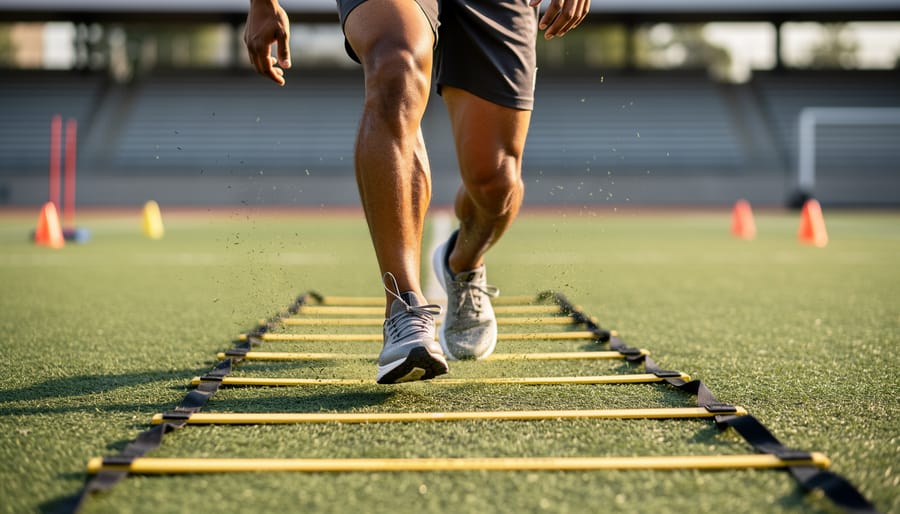
Speed and agility work should feel like a game, not a drill sergeant’s workout. Keep sessions short, around 15 to 20 minutes, and stop while kids still want more.
Acceleration: Start with 10-yard sprints from a staggered stance. Cue the kids to “lean forward, drive your knees, push the ground away.” Younger players can race to a cone or chase a partner. Older players can add a three-point start.
Change of direction: Set up a simple five-cone zigzag or an “L” pattern. Coach them to “get low, plant the outside foot, push off.” Add a reaction element by having a partner point left or right at the last second.
Footwork: Use an agility ladder or tape lines on the grass. Start with one foot in each square, then try lateral shuffles and quick in-and-outs. Slow and clean beats fast and sloppy.
Catching and ball handling: Pair players up for short tosses, then progress to catching on the move. Cue “eyes on the ball, hands up, tuck it away.”
Lateral movement practice borrowed from skating, such as side-to-side hops and push-off bounds, builds the same hip and leg power that helps with cutting on the field.
Bodyweight Strength and Core Basics
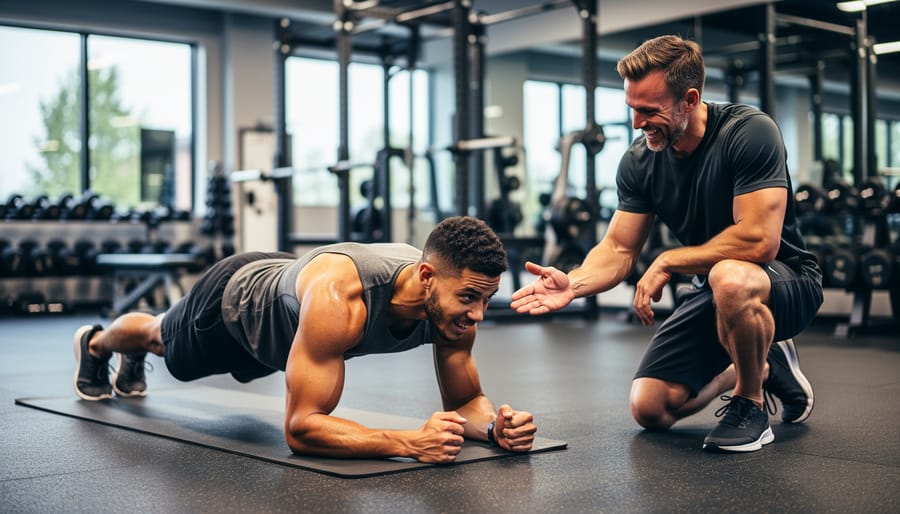
Bodyweight strength is where young players build the foundation for everything else. The goal here is clean movement, not heavy work, so keep the reps low and the form sharp.
Start with five simple movements:
– Squats: Feet shoulder-width apart, chest up, sit back as if lowering into a chair, and keep the knees tracking over the toes.
– Push-ups: Hands under the shoulders, body in one straight line. Kids who can’t hold that line should start with their hands on a bench or the knees on the ground.
– Planks: Hold a straight line from head to heels with the belly button gently pulled in. Short, solid holds beat long, sagging ones.
– Lunges: Take a controlled step forward, lower until both knees bend, then push back up.
– Glute bridges: Lie on your back, feet flat, and lift the hips until the body forms a line from shoulders to knees.
Aim for two or three sets of six to ten reps, or 10 to 20 second planks, with plenty of rest between sets. If form breaks down, stop the set.
As kids mature and the movements feel easy, progress gradually. Add a pause at the bottom of a squat, try single-leg bridges, or lengthen the plank holds. Only add light resistance, like a band or a soft weighted ball, once technique is consistent and a coach is watching.
Sample Weekly Schedule: Off-Season and In-Season Side by Side
Here’s a simple way to see how the two phases differ. The off-season builds your base. Once games begin, the goal shifts to staying sharp without piling on fatigue. If you want to see how another sport handles this shift, this guide on off-season training structure shows the same build-then-maintain idea in action.
| | Off-Season Week | In-Season Maintenance Week |
|—|—|—|
| Training days | 3 days (e.g., Mon, Wed, Fri) | 1 to 2 short sessions (e.g., Tue, plus an optional light day) |
| Focus | Speed, agility, bodyweight strength, mobility | Quick warm-up, light core and mobility, skill touches |
| Session length | 45 to 60 minutes | 15 to 25 minutes |
| Games/Practices | Optional play in another sport | 1 game plus 1 to 2 team practices |
| Rest days | 3 to 4 (including one fully off day) | 3 to 4, with the day after a game kept easy |
Notice how the weekly volume drops once the season starts. The sessions get shorter, but they don’t disappear. A few focused minutes keep the habits and movement skills you built in the off-season alive.
Recovery becomes the priority as games stack up. Protect sleep, keep water bottles close, and treat the day after a game as a light movement day. Adjust the days to fit school and family life, and treat this as a starting template rather than a strict rulebook.
Expert Insight: What Coaches Recommend for Young Athletes
Because every program and athlete is different, we’re not putting words in any coach’s mouth here. Instead, this is the Q&A framework we use when sitting down with a certified youth strength and conditioning coach or an experienced youth football coach. Swap in your own coach’s answers, with their name and credentials, before publishing.
How do you keep sessions fun for kids?
[Coach’s answer: for example, games, relays, small competitions, and short stations that keep everyone moving.]
What one piece of advice would you give a parent starting this plan?
[Coach’s answer.]
Tip for the interview: ask your coach to name the certification they hold and how long they’ve worked with young athletes, so readers know exactly whose advice they’re getting.
How to Check Progress and Plan Your Next Steps
Progress in the off-season rarely shows up as a trophy. It shows up as small, steady wins you can see if you know where to look. Start with the easy markers: cleaner technique on drills, more energy through a session, and a kid who still wants to come back next week. If enjoyment drops, that tells you more than any stopwatch.
For a little hard data, pick two simple tests and repeat them every 4 to 6 weeks: a standing jump (measure the distance with tape) and a short sprint over 10 or 20 yards. Test in the same spot, with the same warm-up, so the results are fair. Treat the numbers as a conversation starter, never as a grade.
- Technique looks smoother and more confident on warm-up and agility drills.
- Energy stays steady through the whole session and recovery between days feels normal.
- Standing jump and sprint times hold steady or improve at each retest.
- Retest every 4 to 6 weeks, then adjust volume up or down based on how the body feels.
- Schedule an easy rest week if soreness or tiredness lingers.
- Shift to in-season maintenance before the first practice.
If progress stalls, resist the urge to simply add more work. Check sleep, food, and whether sessions have turned into a chore. Often, trimming a day or swapping in a favorite game helps more than extra reps.
About a week before practices begin, move to the lighter maintenance schedule: shorter sessions, fewer days, and recovery protected. That keeps the gains without wearing young players down before the first whistle.
Youth Football Off-Season Training: Common Questions
Most families have the same handful of questions once the season ends, so here are short, practical answers.
How many days a week should young players train in the off-season?
Two to three short sessions a week is plenty for most young players, with at least one full rest day between harder sessions. Younger kids do well with two playful sessions, while older teens can add a third.
What age can kids start strength training?
Children can start with bodyweight movements like squats, planks and push-ups once they can follow directions and focus on technique. Add load gradually and only under qualified supervision.
Should kids take time fully off?
Yes. A week or two of unstructured rest after the season helps the body and mind recover, and playing freely with friends still counts as healthy movement.
How do we balance football with other sports?
Treat other sports as part of the plan, not competition for it. Skating, hockey, soccer and swimming all build athleticism, so just keep an eye on total weekly load and protect rest days.
How do I keep my child motivated?
Keep sessions short, varied and game-like, and celebrate effort and small improvements rather than results. Letting kids pick a drill or set a personal goal gives them ownership.
If a question comes up that isn’t covered here, a certified youth coach or your child’s doctor is the best place to get a personalized answer.
The off-season isn’t about doing more. It’s about doing the right things, steadily, and enjoying them. A few playful sessions each week, built around mobility, speed, agility, bodyweight strength and plenty of rest, will do more for a young player than any single punishing workout. When kids finish the offseason feeling confident and energized instead of burned out, they show up to the first practice ready to learn, and that readiness carries straight into the in-season plan.
Remember that the two phases work together. Off-season work builds the base, and a lighter in-season routine keeps it strong while games and recovery take priority. Keep the technique clean, listen to how your athlete feels, and let their progress, enjoyment and growing confidence guide your adjustments.
You don’t need a perfect plan to begin. This week, pick one simple session: a short warm-up, a few fun agility drills and some bodyweight basics. Then build from there. When you’re ready for more ideas, explore the other training resources on our site, including our guides to Off-Season and In-Season Training Plans, and keep building a stronger foundation one session at a time.